


Preventative Botox uses small, early doses to relax the muscles that cause expression lines before those lines become permanent. Often called baby Botox, it's about slowing lines, not erasing them.
There's no magic age. The signal is when fine lines begin to linger after facial expressions. You must be 18 or older, and the treatment is optional. A consultation is the best way to know if it's right for you.
The idea behind preventative Botox is simple. It won't erase wrinkles you already have. Instead, it aims to slow new ones from setting in. If you're thinking of visiting our medical spa in London, Ontario, this preventative Botox guide breaks down what it is, the best age to start, whether past Botox changes anything, and what first-timers should consider.
To understand preventative Botox, you must know how wrinkles form. Lines start as dynamic wrinkles, which appear when you move your face while frowning or squinting. Over the years, repeated folding can turn them into static wrinkles visible even at rest.
Preventative Botox steps in before that happens by gently relaxing the muscle, which blocks the signal that causes repeated creasing. The aim is to slow a dynamic line from becoming a permanent one. It's often called "baby Botox" because it uses smaller, lighter doses compared to established wrinkles. The product itself is the same. Only the dosage used to treat and the goal are different. Want the basics first? Our complete guide to Botox treatment in London covers how Botox works.
When Should You Start Preventative Botox?
There's no magic age. The signal is when fine lines start to linger after your face relaxes. You must be at least 18, and whether it's appropriate depends on your facial movement and whether expression lines are forming.
Forget chasing a specific number. The real signal is what your skin is doing. The common advice is to start when fine lines appear after you stop making an expression, but before they're etched in. For many people, that's around the mid-to-late 20s, but it varies a lot.
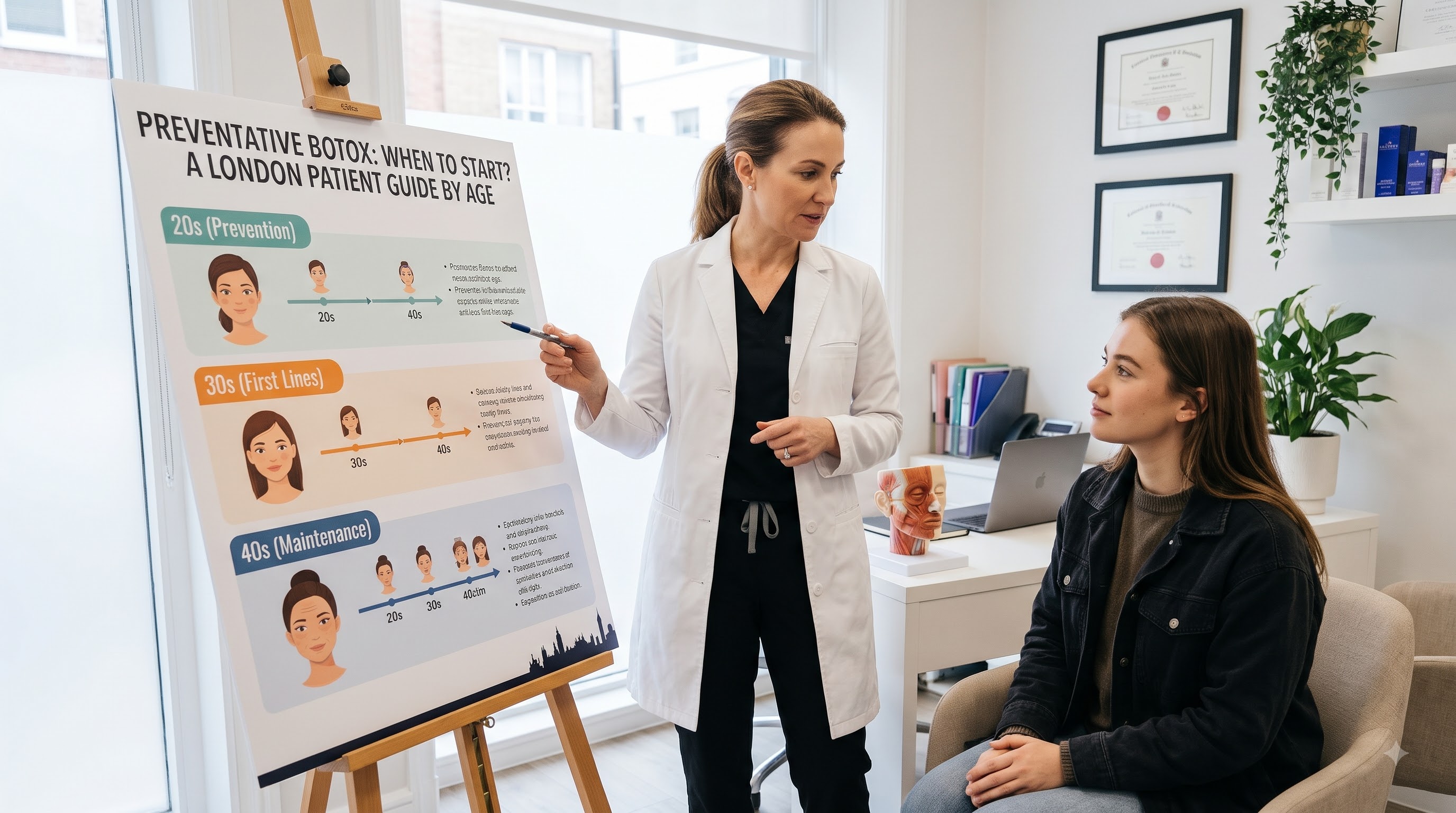
You also have to be at least 18, and being over 18 doesn't mean you need it. If you make a big expression and the line disappears completely, you're likely not ready yet. Interest in preventative treatment has grown among younger adults in recent years. In Canada, injectable treatments are overseen by regulated medical bodies such as the Canadian Society of Plastic Surgeons, so it's important to seek care from a qualified professional. Here's a simple by-age snapshot.
| Age range | Typical approach | Common focus areas |
|---|---|---|
| Early 20s | Often not needed yet; very light dosing only if early lines linger | Forehead lines, frown lines |
| Mid-to-late 20s | Most common start; small, conservative “baby Botox” doses | Forehead lines, frown lines, crow's feet, bunny lines |
| 40s and beyond | Softens established lines; often paired with other treatments | Forehead lines, frown lines, crow's feet, bunny lines |
This table is a general guide only. The right time to start depends on your individual facial movement and the development of expression lines, not age alone.
Should You Get Preventative Botox in Your 30s?
Your 30s are the most common time to start. Fine lines may begin to appear, especially on the forehead. Light, regular dosing can soften them and slow wrinkles from going deep, while keeping a natural, expressive look.
The 30s are the sweet spot for many people. This is often when fine lines start to stick around a little after you relax your face, especially the frown lines (the "elevens") and forehead lines. Collagen also starts to dip, so the skin folds a touch more easily.
Light, regular dosing in your 30s can soften those early lines and slow them from deepening, while keeping your face fully expressive. It's a matter of quick visits, no downtime, and a refreshed look that nobody can pin down. It's prevention and gentle correction at the same time.
Should You Get Preventative Botox in Your 40s and Beyond?
Yes, it still helps in your 40s and beyond. Botox softens established expression lines and refreshes the face, though deeply etched lines may not vanish fully. At this stage, it's often paired with other treatments for the best result.
It's never too late to start, and the 40s are a great time to benefit. Be realistic, though. Deeply etched static lines may not disappear completely with Botox alone. That's why, at this stage, it's often combined with other treatments. Pairing Botox with dermal fillers can restore lost volume and soften deeper folds from below. We'll map a plan that suits your skin, not a one-size template.
Can You Get Preventative Botox If You've Had Botox Before?
Absolutely. Having Botox before doesn't stop you from a preventative, lighter approach now. Many patients shift to smaller maintenance doses over time. Your injector reviews your history and adjusts your plan, so past treatment only helps guide better dosing.
If you've had Botox before, your injector already has useful clues:
- How your muscles responded
- How many units did you need, and
- How long did the results last
That makes it easier to fine-tune a lighter, preventative Botox plan for the future.
An experienced, qualified injector can use your treatment history, how you responded before, and the outcome you want to determine the right dosage and treatment plan. So previous Botox isn't a barrier to a preventative approach. It's a head start. Just share your past treatments at your consultation so we can build on what already worked for you.
What Should First-Timers Do Before Trying Preventative Botox?
Before starting, think about your goals, your budget, and your comfort with maintenance every few months. Choose a trained medical injector, book a consultation, and start conservatively. Good skincare and daily sunscreen matter just as much as any injection.
If preventative Botox is new to you, a little thought up front goes a long way. This is a commitment to maintenance, not a one-time fix, so it helps to be clear on what you want before you book. A few things to consider first:
- Your goals: Are you treating a specific early line, or just exploring? Knowing this shapes the plan.
- Maintenance and budget: Results last a few months, so plan for repeat visits. More frequent visits may be required depending on your individual treatment plan.
- The right injector: Choose a trained, qualified, and experienced medical injector rather than focusing on price.
- Start Conservatively: Less is more with prevention. You can always add a little at a follow-up.
- Skincare basics: Daily sunscreen and follow a good skincare routine. Avoid makeup on the injected area when you start the treatment.
If you're brand new to injectables, our guide on what to expect at your first Botox consultation visit walks through the whole process. The best first step is always a no-pressure consultation, where we'll tell you honestly whether prevention makes sense for you yet.
Which Botox Brands Are Best for Preventative Treatment at a Medical Spa in London?
At our clinic, preventative treatment is done with Botox. The most important factor isn't the brand; it's choosing an experienced, qualified injector who can recommend the right product, dosage, and approach for you.
Preventative Botox uses the same trusted, approved product as regular treatment. At Aqua Medical Spa, in London, the key consideration is simple: choose an experienced injector who can recommend the appropriate product and treatment plan for you. If you’re curious about how Botox, Dysport, and Xeomin compare, we’ve broken that down too. Whichever product your injector recommends, the goal is the same: a natural, subtle result that fits your face.
How Often Will You Need Preventative Botox, and What Does It Cost?
Preventative Botox is a maintenance habit, so think in terms of the year, not a single visit. Even with lighter doses, results typically last about 3 to 4 months, so most people return three to four times a year.
The upside is that smaller, preventative doses use fewer units, so each visit can cost less than treating a deep, established wrinkle. For a full breakdown of units and prices by area, see our London Botox pricing guide. We'll always give you a clear quote at your consultation, with no surprises.
Is Preventative Botox Right for Everyone?
No, and that's an honest answer. Preventative Botox is optional. If you have no early lines or you're not comfortable with ongoing maintenance, it's fine to wait. Healthy skin habits prevent plenty on their own.
It also isn't for everyone. If you don't have early lines, if you're pregnant or breastfeeding, or if you don't want the upkeep, waiting is perfectly reasonable. You can read more about Botox safety during pregnancy and breastfeeding if that applies to you. Preventative Botox may also not be right if you already have established or permanent lines and wrinkles, since it may not give the result you want on its own.
In that case, it's often combined with other treatments. The truth is that the long-term "prevention" benefit is promising but still being studied, and results vary from person to person. Daily sunscreen, sleep, and a steady skincare routine do a lot of heavy lifting on their own.
Will Preventative Botox Mean Fewer Treatments Later?
Possibly. Some research suggests muscles treated regularly may contract less over time. So you might need fewer units or less frequent visits later. The evidence isn't firm, so treat it as a possible bonus, not a guarantee.
The idea is that regularly relaxing a muscle can "train" it to contract less forcefully over time. If that happens, you may eventually need fewer units or stretch the time between visits.
Some patients do report this, and it's a reasonable theory, but there is no exact evidence for it. So we won't promise it. Think of it as a possible bonus, not the main reason to start. The clearer benefit is simpler: softening lines early so they're slower to set in. We'd always rather set honest expectations than oversell a result.
How Can You Make Preventative Botox Results Last Longer?
Botox does part of the job, but how you treat your skin between visits matters just as much. The good habits that protect your skin will also help your preventative results look their best for longer. For more ideas, try these tips to make Botox last longer. Some simple ways to protect your investment:
- Wear sunscreen daily: Sun damage is a top cause of wrinkles. This matters in London's bright summers as much as anywhere.
- Keep a steady skincare routine: Gentle cleansing, moisturizing, and a quality serum support healthy skin.
- Stay hydrated and sleep well: Both help your skin look fresher and healthier.
- Be consistent: Keeping to your schedule prevents long gaps where movement and lines can come back.
Frequently Asked Questions
1. What is baby Botox? Is the baby Botox treatment available in London?
Yes, the treatment is available at Aqua Medical Spa, London. Baby Botox is a nickname for small, conservative doses of the same product. It softens muscle movement gently while keeping your natural expression. Despite the name, it can deliver a complete treatment with a natural-looking result, not just a reduced version of Botox. It's popular for prevention and first-timers.
2. Does preventative Botox really work in London?
It can slow dynamic lines from becoming permanent, which is the goal. Results are individual and vary from person to person, so a consultation helps set realistic expectations. If you’ve had Botox and saw little change, here’s why your Botox didn’t work.
3. Is it bad to start Botox too early?
Starting before you have any early lines usually adds cost and upkeep for little benefit. It isn't dangerous in small doses, but it may not be necessary. A good injector will tell you honestly if you're better off waiting.
4. Is preventative Botox cheaper than regular Botox?
Yes, per visit it often can be, because it usually uses fewer units. But your overall cost depends on your treatment plan and how often you come in, since you maintain it a few times a year. We give a clear quote at your consultation so you can plan.
5. Will preventative Botox make me look frozen?
No, not when it's done right. Prevention is all about small, light doses that soften movement while keeping your natural expression. If you are worried about other claims you’ve heard, separate the Botox myths from the facts to decide rationally.
6. Which areas are treated with preventative Botox?
Usually, the upper face includes forehead lines, frown lines (the elevens), and crow's feet. These are the first areas where dynamic lines tend to form. Your injector targets where your early movement patterns show.
7. Can preventative Botox reverse wrinkles I already have?
No. Botox can soften existing lines, but established, static lines and wrinkles may need additional treatments to get the result you want. When established lines are present, Botox is often combined with other treatments.
8. Do men get preventative Botox in London?
Yes, more men are choosing it every year. The approach is the same, though men often need a few more units because facial muscles tend to be larger. The technique is adjusted to keep the results natural and masculine.
9. How do I know if I'm ready for preventative Botox?
A simple check: look at your face at rest in natural light. If fine lines linger when you're not making an expression, you may be ready. The best way to know for sure is a consultation at our clinic, where we can assess your facial movement and lines and tell you whether preventative Botox is appropriate for you.
10. Can preventative Botox affect your facial expressions over time?
When administered appropriately, preventative Botox softens targeted muscle activity while preserving natural facial expressions. An experienced injector adjusts the dosage to avoid an overdone appearance.
Wondering if it's the right time for you?
The simplest way to find out is a free, no-pressure consultation. Book an appointment online with Dr. Armogan and our team in London, and we'll look at your skin and tell you whether preventative Botox makes sense for you yet. You can also call us at (519) 681-2800 to learn about our free consultations and appointment schedules.