

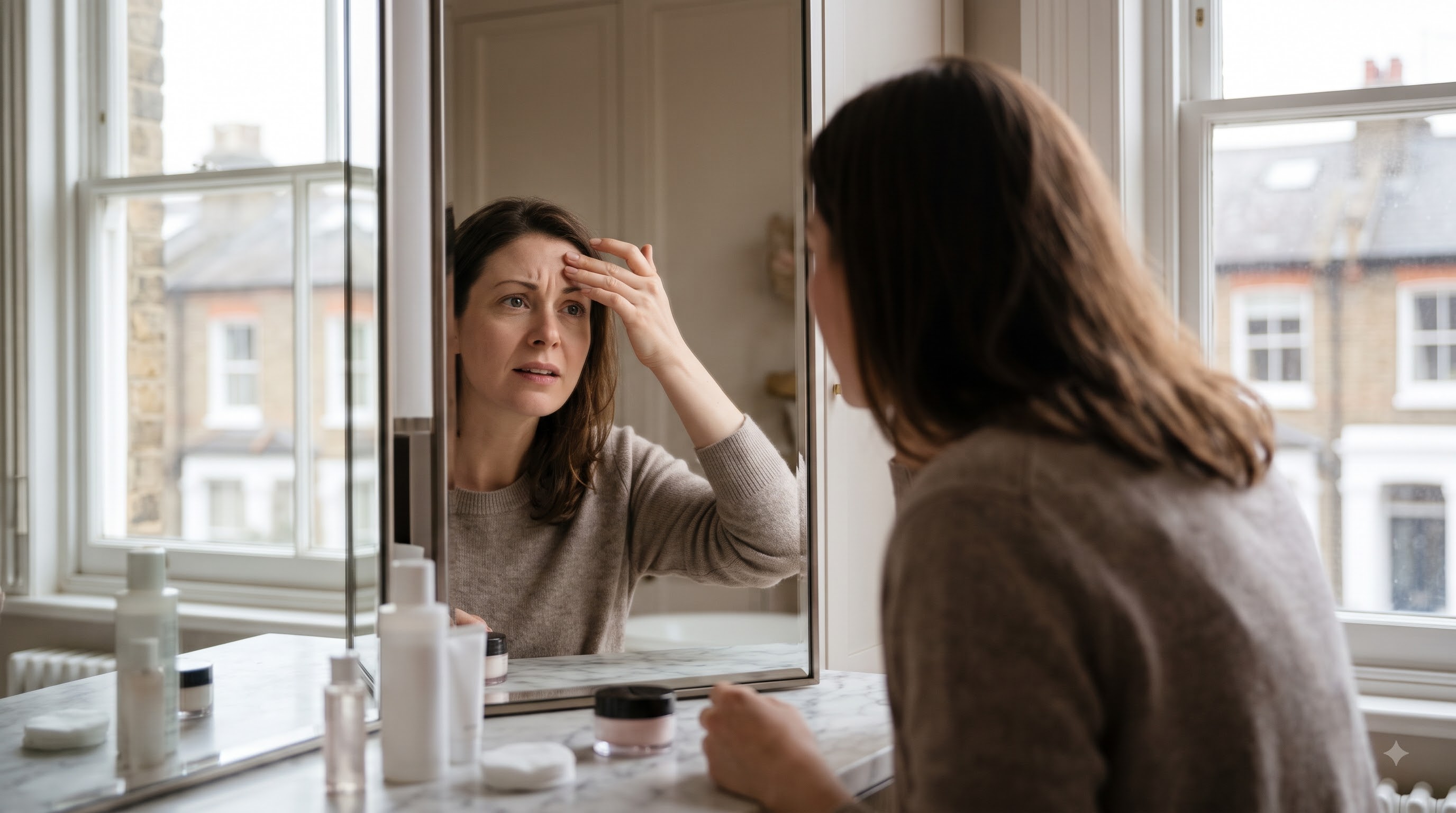
If your Botox didn't work in London, the issue usually falls into one of three buckets: complete failure (no effect), partial failure (uneven results), or early failure (faded too fast).
The reasons range from dose and injection technique to antibody resistance, medications, and even London's harsh winter weather. This guide walks through every cause, how to diagnose which one applies to you, and what to do next.
Why does Botox treatment fail? Is there any special reason?
The truth is more interesting. Botox failure has many possible causes. Some are biological, some are technical, and some are about timing. Many of them have nothing to do with the patient or the provider. This guide unpacks every reason, especially the ones London patients ask about most.
Botox is one of the most studied cosmetic treatments in the world. At our medical spa in London, Ontario, the vast majority of patients see exactly what they hoped for. But sometimes Botox doesn't deliver the smoothing, the lift, or the migraine relief patients were expecting. When this happens, it's frustrating and easy to blame yourself or the clinic. Before assuming something went wrong, figure out the Botox myths from the facts for reality.
What are the types of Botox treatment failure in London?
There are three types of Botox failure: Complete failure, partial failure, and early failure. Before diagnosing why your Botox didn't work, we need to know what type of failure happened. Patients often describe their experience differently, so let's get specific.
| Type of failure | What it looks like | When you notice it |
|---|---|---|
| Complete failure | No change at all in the treated area | After day 14 |
| Partial failure | Some areas smoothed, others were not | After day 14 |
| Early failure | Worked at first, but faded within 6 to 8 weeks | Weeks 6 to 8 |
Each type points to different possible causes. A complete failure usually involves dose or product issues. A partial failure usually involves technique or anatomy. An early failure usually involves metabolism, medications, or activity. When you book a follow-up at our London clinic, the first thing we'll ask is which type of failure you experienced. This shapes the entire conversation. We have listed below the 10 main reasons as to why Botox treatment fails:
1. The Dose Was Too Low for Your Muscles
Different people need different doses. The same forehead might need 12 units in one patient and 24 units in another. Muscle mass varies, and so does how quickly your body processes the product.
If your dose was low for your anatomy, results may be subtle, short-lived, or absent. This is one of the common reasons Botox didn't work for first-time patients. It isn't a clinic mistake. It's a conservative starting strategy that protects against frozen looks but sometimes underdelivers.
The fix is simple. At your follow-up, your injector can add units to areas that didn't respond. Within two weeks of the top-up, you should see the result you wanted. If you’re unsure how units translate into cost, our Botox pricing guide for London breaks it down for you.
2. Where was the Botox injected? Which area was treated?
Botox only works on the exact muscle it touches. If a product is placed slightly off the target muscle, results can be uneven. This isn't about skill alone. It's about anatomy. Two people of the same age and gender can have very different muscle patterns. Your frown muscles might sit higher, lower, or wider than average. Without careful mapping, even a skilled injector can miss the spot.
At Aqua Medical Spa, London's best medical spa, we ask patients to make exaggerated facial movements before treatment. This shows us where each muscle actually fires, not just where textbooks say it should be.
Areas with smaller, more variable muscles (around the eyes, mouth, and the chin) are more prone to placement issues than larger zones like the forehead. If your crow's feet didn't respond but your forehead did, placement is the likely reason.
3. Antibody Resistance (the Biological One)
This is the most under-discussed reason. Some patients develop antibodies that neutralize botulinum toxin, which makes it less effective. The risk is higher in medical Botox patients (chronic migraine, hyperhidrosis, TMJ) who receive larger doses every few months.
For cosmetic patients receiving smaller doses every three to four months, antibody formation is uncommon but possible. If you've used Botox for many years and you suddenly stop seeing results, antibodies are worth ruling out.
The fix often involves switching to a different toxin. Dysport, Xeomin, or newer products have slightly different protein structures. Xeomin in particular has fewer accessory proteins, which some research suggests lowers the risk over the long run. To see the differences in detail, check our complete guide to how Botox, Dysport, and Xeomin differ from each other.
4. Product Quality and Storage
Botox needs to be stored cold and used within a specific time window after reconstitution. If a clinic dilutes it too much or stores it incorrectly, potency drops.
Every legitimate London medical spa orders Botox directly from Allergan (the manufacturer) and follows strict cold-chain protocols. Sketchy deals on Botox, mobile injectors, or unlicensed providers may use questionable products.
If your Botox didn't work and you used a discount clinic or a non-physician provider, product quality is worth questioning. Always ask to see the unopened vial before treatment. Reputable providers welcome the question and are happy to show you.
5. Medications and Supplements That Interfere
Several common medications and supplements can affect Botox treatment results. Many patients don't realize this until after their results disappoint.
| Category | Common examples | Why it matters for Botox |
|---|---|---|
| Antibiotics (aminoglycoside) | Gentamicin, Tobramycin, Neomycin | Can amplify muscle weakness or alter toxin action |
| Muscle relaxants | Cyclobenzaprine, Baclofen | May interfere with Botox's muscle effects |
| Blood thinners | Aspirin, Ibuprofen, Warfarin | Increase bruising and may shift product placement |
| Calcium channel blockers | Amlodipine, Diltiazem | Some evidence of impact at the nerve-muscle junction |
| Supplements | Fish oil, Vitamin E, Ginkgo, Garlic | Increase bruising and may affect product diffusion |
Inform your injector exactly what you take, including over-the-counter products and herbal supplements. Stop blood thinners and supplements (with your doctor's approval) about a week before treatment. This is one of the simplest fixes for early failure.
6. You have hit the gym too soon after Botox
Botox needs about four hours to bind to the muscle. Heavy exercise immediately after treatment can disperse the product before it has a chance to settle.
We recommend no intense exercise for 24 hours after Botox at our medical spa in London. This includes hot yoga, spin class, weightlifting, and running. A walk is fine, but anything that gets your heart racing should wait.
Some patients also lie flat or rub their foreheads too soon after treatment. Both can move the product to unintended muscles, causing partial failure or strange asymmetry. Sit upright for the first four hours and keep your hands off your face. For the full list of precautions, see what not to do after Botox.
7. Recent Illness or Vaccinations
Your immune system affects how Botox works. If you had a recent illness, infection, or vaccination, your body may metabolize Botox or develop a stronger immune response to it.
Most patients won't notice this. But if you got Botox while recovering from a cold or flu, or within a week of a vaccine, and you're not seeing results, your immune state could be the reason.
Autoimmune conditions like lupus or rheumatoid arthritis can also affect how your body responds to injectables. If you live with an autoimmune diagnosis, share it with your injector. They may adjust the dose, timing, or product to fit your situation.
This is rare but worth considering. The fix is straightforward: retry once you've fully recovered, ideally a few weeks after any illness or vaccination, with your full medical history on file.
8. London Weather and How It Affects Botox Results
London, Ontario, has a humid continental climate with harsh winters and hot, humid summers. However, the weather doesn't change how Botox works at the muscle level, but it absolutely changes how Botox results look on your skin.
Winter: Dehydration and Cold Air
In winter, cold, dry air dehydrates skin and emphasizes fine lines. If you got Botox in November and felt disappointed by January, the wrinkles you're seeing may actually be hydration lines, not muscle lines. Botox can't fix dehydration.
Indoor heating during London winters drops humidity even further, often below 30 percent. This dries out the skin barrier and makes existing lines look deeper. A humidifier and richer moisturizer often help more than a Botox top-up during these months.
Summer: Sun and UV Damage
In summer, sun exposure breaks down collagen faster. UV damage creates new fine lines even while Botox is still active in your muscles. London's high summer UV index means daily sunscreen is essential to seeing your Botox results clearly.
Patients who often travel, especially to dry climates or high altitudes, may notice that Botox wears off faster. Their muscles are still relaxed, but their skin texture has worsened, masking the effect. If you want your results to hold up through every season, try these tips to make Botox last longer.
9. Heavy Muscle Mass or Genetic Factors
Some people have naturally stronger or denser facial muscles. Men often need higher doses than women. Patients who clench, grind, or chew gum heavily develop bigger masseter and temporalis muscles, which need more product to relax.
Genetics also plays a role. A small percentage of patients metabolize botulinum toxin faster than average. If your mother and sister both report short-lived Botox results, you may share their fast-metabolizing pattern.
This isn't a problem you can fix permanently, but you can manage it. We adjust dose, treatment spacing, and product selection to match how your body actually responds.
10. You Might Be Misdiagnosing the Cause
Sometimes Botox works perfectly, and the lines you still see are not what Botox treats. Botox treats dynamic lines (the ones that appear when you move your face). It does not treat:
- Static lines (the ones present even when your face is at rest)
- Skin laxity (sagging or loose skin)
- Volume loss (hollow cheeks or under-eyes)
- Sun damage (rough texture, pigmentation, broken capillaries)
- Hydration lines (vertical creases from dryness)
If your forehead is smooth when you raise your eyebrows but still shows lines at rest, Botox did its job. The remaining lines are static and need a different treatment, usually dermal fillers, skin resurfacing, or a combination of both. Starting early can help, so learn when to start preventative Botox by age.
How to Diagnose Your Specific Type of Failure?
Let's put it all together. Walk through this checklist at home before your follow-up appointment. Your honest answers help your injector plan the right next step.
| Question | If yes... | If no... |
|---|---|---|
| Did anything change between week 0 and week 14? | Likely partial failure | Likely complete failure or static lines |
| Did some areas smooth and others not? | Partial failure (technique or dose) | Continue to the next question |
| Did it work for 4 to 6 weeks, then fade fast? | Early failure (metabolism, activity, supplements) | Continue to the next question |
| Have you used Botox for many years? | Consider antibody resistance | Continue to the next question |
| Did you start any new medications recently? | Possible drug interference | Continue to the next question |
| Does your forehead smooth when you raise your brows? | Likely static lines, not muscle lines | Likely true Botox failure |
What to Do Next when you diagnose Botox Failure: A London Patient Action Plan
- Step 1: Schedule a follow-up at the original clinic. Most reputable London clinics offer free touch-ups within 2 to 4 weeks if patients didn't see the expected result.
- Step 2: Bring records. Note the date of your last treatment, the areas treated, the units used (if you know), and any medications or supplements you've started since.
- Step 3: Take honest photos. Compare your face at rest, with full expression, and with exaggerated movement. Photos from two weeks before treatment are even more useful.
- Step 4: Walk through the diagnostic checklist together. Your injector will confirm whether it is the dose, technique, antibodies, medications, or static lines.
- Step 5: Choose the right next step. This might be a product switch, a longer waiting period before retreatment, a top-up dose, or entirely a different treatment (filler or skin resurfacing).
When to Switch Products vs. Try Again — What And When Should You Do?
If you got partial results and the issue seems to be dose, the fix is more product, not a different product. Stick with what worked even partially. If you get no results twice in a row with the same product, or if your dose has been creeping up without effect, consider switching.
Dysport and Xeomin are alternative botulinum toxins available at most London clinics. They have slightly different molecular structures and may work better for patients who don't respond to Botox.
If you've used Botox for many years and recently lost responsiveness, switching to Xeomin specifically is often recommended. Some research suggests Xeomin's purer formulation may lower antibody buildup over time.
How Long Should You Wait Before Trying Botox Treatment Again?
This depends on the type of failure.
- For partial or complete failure: Wait 2 to 4 weeks after the original treatment before adding more. This lets the original product fully kick in. If results are still missing at week 4, that's your true outcome.
- For early failure: Wait the full 12 weeks before retreatment, even if results faded at week 6 or 8. Treating too often is one of the fastest ways to develop antibody resistance.
For suspected antibody resistance, many specialists recommend a 12 to 18-month break from Botox, then trying again with a different toxin. This is a discussion to have with a specialist who tracks long-term injectable history.
When to Seek a Second Opinion in London for Botox treatment?
Most Botox failures are easy to fix at the original clinic with a small top-up. But there are times when a second opinion makes sense. Consider seeing another provider if your current clinic dismisses your concerns, refuses a touch-up, can't explain what happened, or has had multiple complaints. Our team at London Medical Spa sees second-opinion patients. We document, diagnose, and rebuild a plan that fits.
Botox Failure Patterns by Treatment Area
Different treatment areas tend to fail in different ways. Knowing this helps narrow down what went wrong.
- Forehead and frown lines (eleven lines): These are the largest, most predictable muscle groups. True failure here is rare. If they didn't smooth, the dose was likely too conservative.
- Crow's feet and around the eyes: Smaller, more variable muscles mean placement matters more. Partial failure (one side worked, the other didn't) is more common here.
- Masseter (jaw slimming, TMJ, jaw clenching): The masseter muscles are powerful. Underdosing is the most common cause of failure. The fix is usually more units at the next visit.
- Hyperhidrosis (excessive sweating in the underarms, hands, feet, or groin): These treatments need accurate mapping with the iodine-starch test. If sweating returned in patches, mapping was likely incomplete.
- Migraine and chronic headache: medical Botox protocols use 31 to 39 injection sites following a strict pattern. Skipping or short-dosing any site can blunt the effect. Always confirm your provider follows the full FDA-approved migraine protocol.
- Neck (necklace lines, neck pain, sagging skin), chest, chin, lips, nose: These are advanced areas that require careful technique. Always choose a physician-led provider for these zones.
Frequently Asked Questions
1. Does drinking alcohol affect how Botox works?
Alcohol doesn't blunt the toxin itself, but it can worsen bruising right after treatment and dehydrate skin over time. Both can make results look less impressive. Skip alcohol for 24 hours after treatment and limit it overall.
2. Can stress make my Botox wear off faster?
Indirectly, yes. Chronic stress increases muscle tension, including in your face, which can shorten the Botox results. It also dries skin and increases inflammation. Stress management may help your results last longer.
3. Why does my migraine Botox seem less effective in winter?
Cold weather can trigger more migraines for some patients, which may make Botox feel less effective even when it's working at full strength. The treatment is still doing its job; the underlying migraine load changes seasonally.
4. Does muscle training stop Botox from working?
Movement during the first four hours can shift product placement, but normal facial expression after that won't reduce effectiveness. The myth that you can train muscles to resist Botox isn't well supported by research.
5. Can I get Botox again if it didn't work the first time?
Yes, in most cases. The exception is if you experienced a true allergic reaction or developed neutralizing antibodies. For everyone else, a tweak to dose, placement, or product usually solves the problem on the second try.
6. How much does a Botox touch-up cost in London?
Touch-ups within 2 to 4 weeks of the original treatment are often free or heavily discounted at reputable clinics. Beyond that window, expect to pay the per-unit rate (typically $10 to $15 per unit in London, Ontario).
7. Will my next Botox treatment work better?
Often, yes. With every visit, your injector learns more about your unique anatomy, how the dose is responding, and your lifestyle. Most patients see their best results from the second or third visit.
8. Can dehydration make Botox look like it failed?
Yes. Dehydrated skin emphasizes fine lines even when muscles are relaxed. Many London patients in winter mistake hydration lines for muscle wrinkles. A humidifier, water intake, and a richer moisturizer often improve perceived results.
9. Why didn't my hyperhidrosis Botox stop my sweating?
Hyperhidrosis treatments need accurate mapping of the active sweat glands using the iodine-starch test. If sweating returned in patches, the original mapping was likely incomplete. Repeated mapping and additional injection points usually solve this.
10. Should I see a different injector if my Botox didn't work?
Try the original clinic first, since they have your records and can offer a free touch-up. Seek a second opinion only if they dismiss your concerns, refuse to investigate, or you've lost trust in their assessment.
Ready to Get the Results You Expected from Botox Treatment?
If your Botox didn't deliver what you hoped for, you don't have to live with it. The right next step starts with a clear-eyed conversation about what happened and why. For a broader overview of the treatment itself, see our complete guide to Botox in London.
Contact our London team today to book a follow-up consultation. We'll diagnose what went wrong, explain your options, and build a plan that gets you the results you wanted in the first place. You can also call us at (519) 681-2800, and our team will give you a complete solution for Botox treatment failure.